
In the last 10 years, we’ve paid $9.8 million in profit sharing to the Kit team. While most companies hope to return money to shareholders in a moonshot acquisition, we’ve created a unique model to help our team think like owners.
Here’s how our compensation model works.
Our mission
Kit exists to help creators build valuable businesses.
My personal mission extends beyond that. I want everyone in my life to have the opportunity to become financially independent, and that includes everyone at Kit. Every team member should have a path to financial freedom.
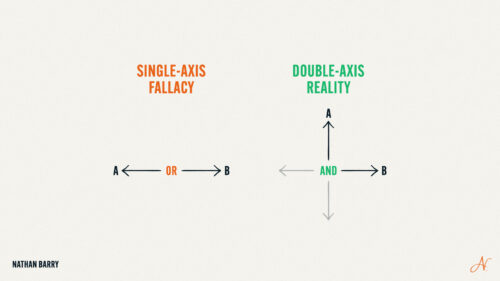
Most companies pick one of two approaches. VC-backed startups go all in on equity and an exit as the path to financial freedom. Bootstrapped companies like Basecamp or Mailchimp don’t give out equity and instead focus on paying high salaries. Neither model is ideal because equity is worthless if the exit never comes, and high salaries alone don’t build lasting wealth.
At Kit, we take a different approach.
Compensation quadrants
A well-rounded model should cover short-term and long-term compensation, as well as guaranteed and performance-based compensation.
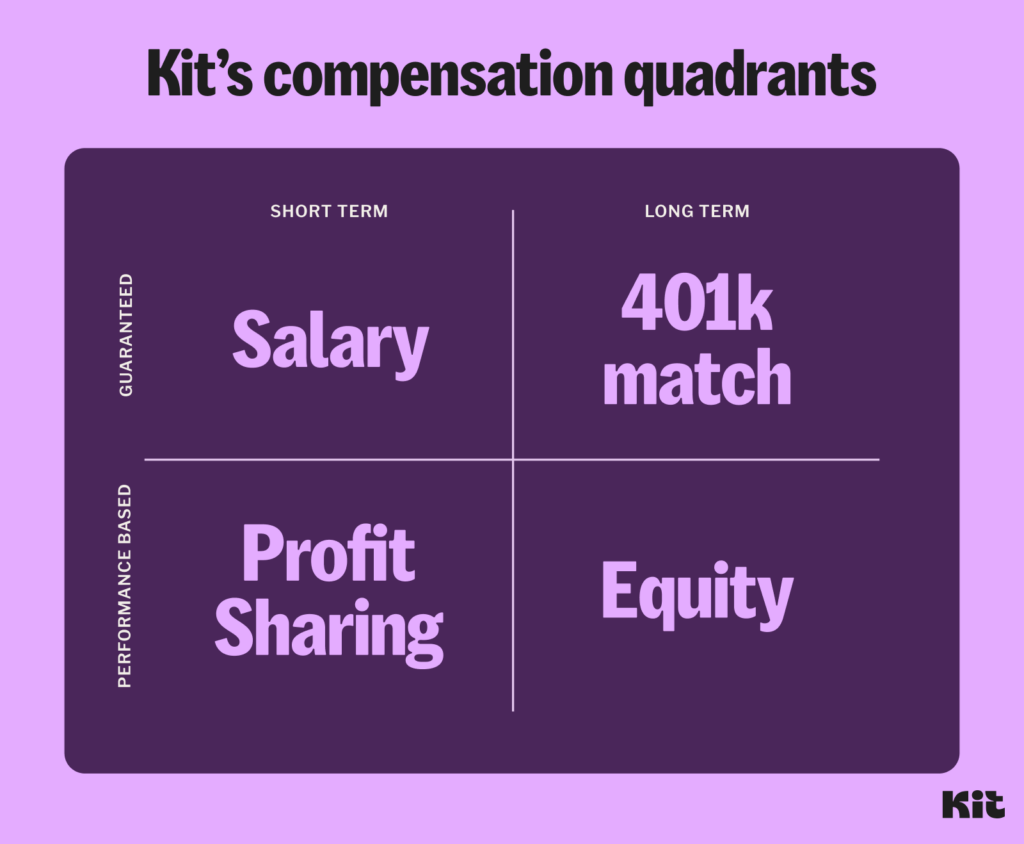
Those quadrants map to four things we offer every team member: salary, 401k match, profit sharing, and equity. Each one serves a different purpose, and together they give people multiple paths to financial security.
Salary
The foundation of compensation at Kit is standardized salaries. We use Salary.com data and pay based on the national average for each role at the 80th percentile. We review compensation data each year.
Standardized salaries mean three things in practice:
- Job listings include salaries to set expectations up front
- Everyone can see their career path and opportunities for growth
- We don’t pay different salaries based on who negotiates or doesn’t
Equal pay for equal work
One of the more controversial parts of our approach is that we don’t change salaries based on location. We have the same expectations for contributing to company results no matter where you live, so it doesn’t make sense to pay one person more for the same job. Equal pay for equal work.
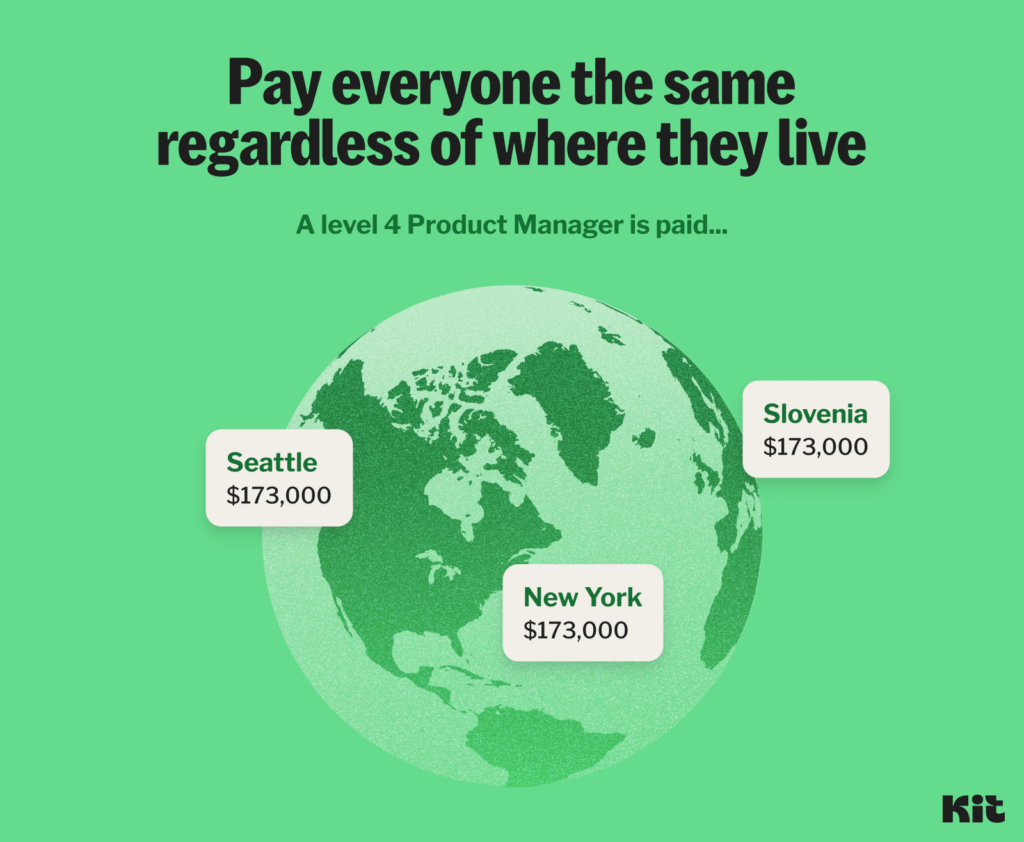
There are no gender pay gaps, no one is punished for not negotiating, and early teammates are paid the same as someone who just joined at the same level.
If our salary spreadsheet were ever leaked, it wouldn’t cause tough conversations.
401k match
We match 5% of whatever a team member contributes to their retirement account. There are many ways to build wealth, but the most reliable is steadily investing in the stock market for decades. A strong retirement match encourages this.
Profit sharing
We want everyone at Kit to make decisions as if they’re spending their own money—because they are.
52% of company profit goes directly to the team. It’s important that it’s more than half.
8% goes into a bonus pool for execs and 40% to owners.
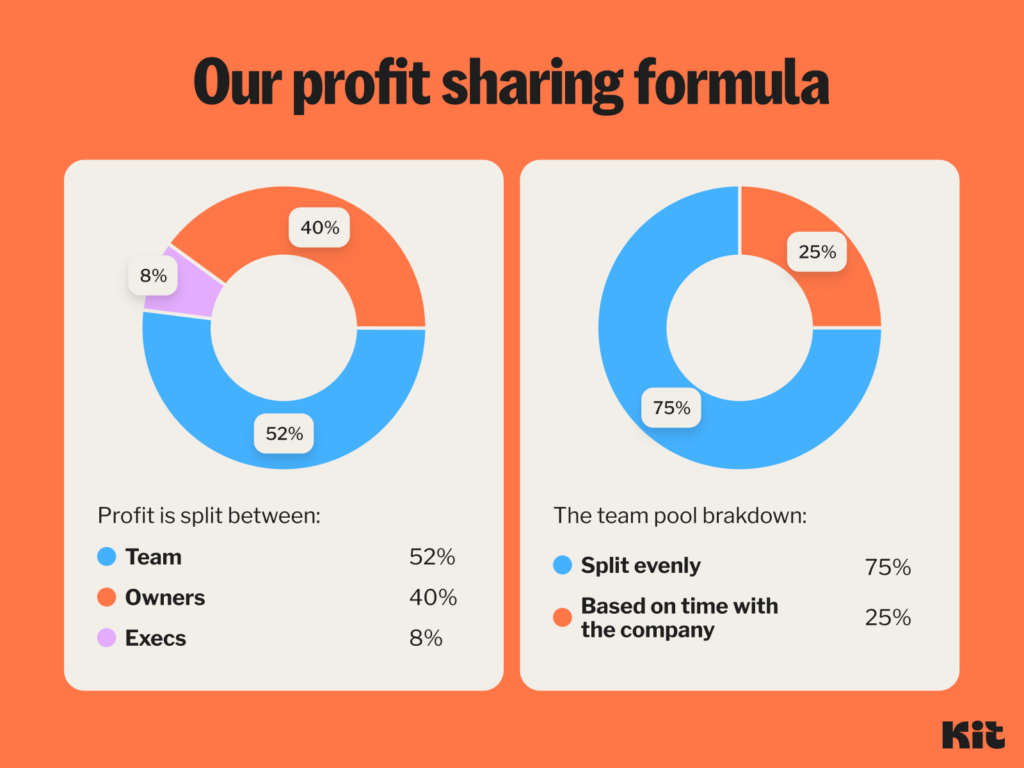
We don’t factor salary into our profit sharing calculations. Yes, some roles have higher market values than others, but that’s already accounted for in our salaries. With this profit sharing model, we all win equally based on the success of the company.
Team member impact
Profit sharing changes how people think about their work, and it also impacts what they’re able to do with their lives outside of it.
When I’m hosting workshops, I’m thinking, ‘How is this going to affect the bottom line? How is this actually going to drive revenue?’ I feel really invested in how the business does. And that’s both emotionally true and financially true.
— Shiv
Because the company’s financial results flow directly to the team, team members think like an owner, considering how every decision affects the bottom line.
I’ve been able to pay off all my student loans just using profit sharing twice a year. And now I’m getting to use it for something really fun—a week-long ski trip in Japan.
— Helen
It’s so awesome to see team members be able to pay off their student loans or put a down payment on a house.
I’ve never worked at a company that does profit sharing. It’s gonna go towards my wedding this year because Indian weddings are very expensive, so I’m super grateful.
— Rohan
It’s very generous and not typical for a company; this idea of, as the company wins, we want everybody to share in that impact. My wife and I are celebrating our 20th anniversary, so we’re gonna do a little weekend away.
— KC
You can hear more from Kit team members sharing their experience with profit sharing in this vlog.
Equity
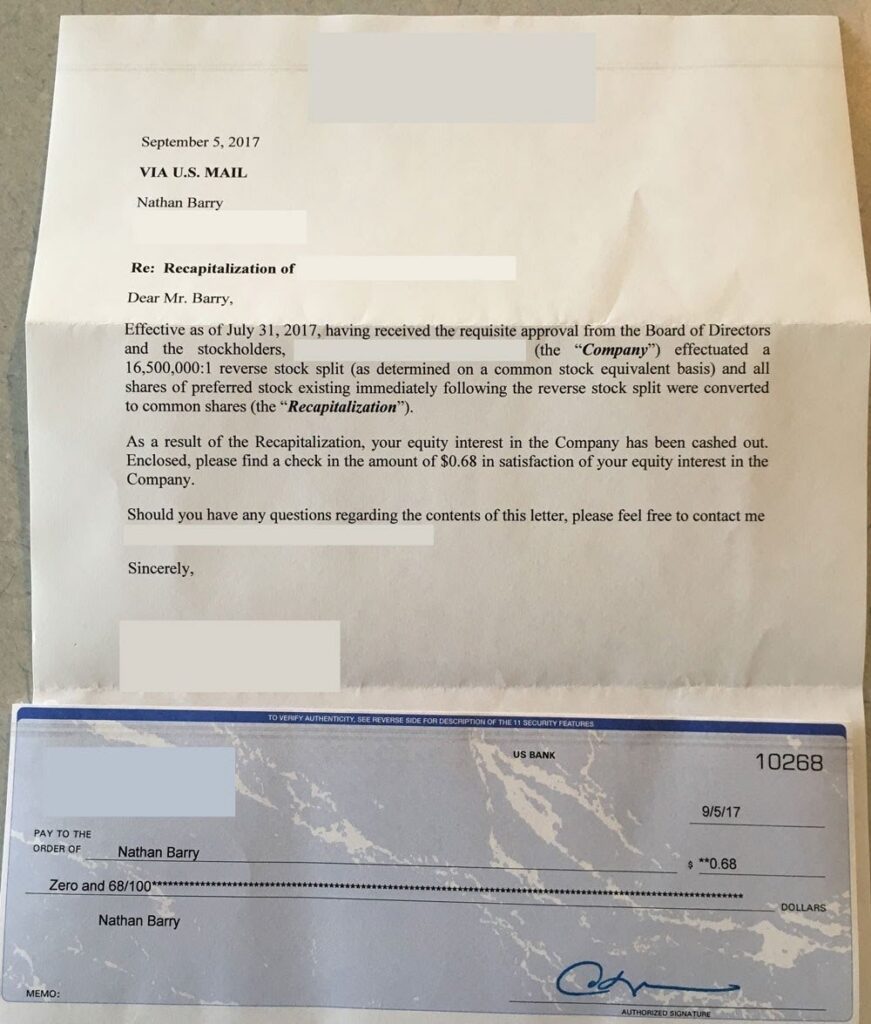
Having real ownership in a successful company is one of the best ways to build wealth. But it can also completely fail. I’ve been on both sides—Kit equity is 95% of my net worth, but an early startup I worked at failed and I ended up with a payout of $0.68.
That’s why we take a balanced approach at Kit. We have meaningful equity grants, but equity isn’t the only way to build wealth here. And since we have no plans to sell Kit, team members need other ways to access the value of their shares. We’ve built two:
The first is stock buybacks. Early on in Kit’s journey, when team members wanted to sell, Kit would buy shares back directly. The valuation wasn’t at its peak since we wanted to keep cash focused on growth, but it was meaningful for those team members.
The second is secondary transactions. AngelList helped us put together a roll-up vehicle (RUV) that combined money from 48 individual investors into a single entity that purchased shares from team members who wanted to sell. The oversubscribed deal valued Kit at $200M and 3.2% of the company changed hands.
We’ve continued to facilitate secondary transactions periodically since then, timing them based on market conditions. These rounds allow us to plan long-term while also providing a path to liquidity for team members who want to pay off debt or buy a house.
Compensation over time
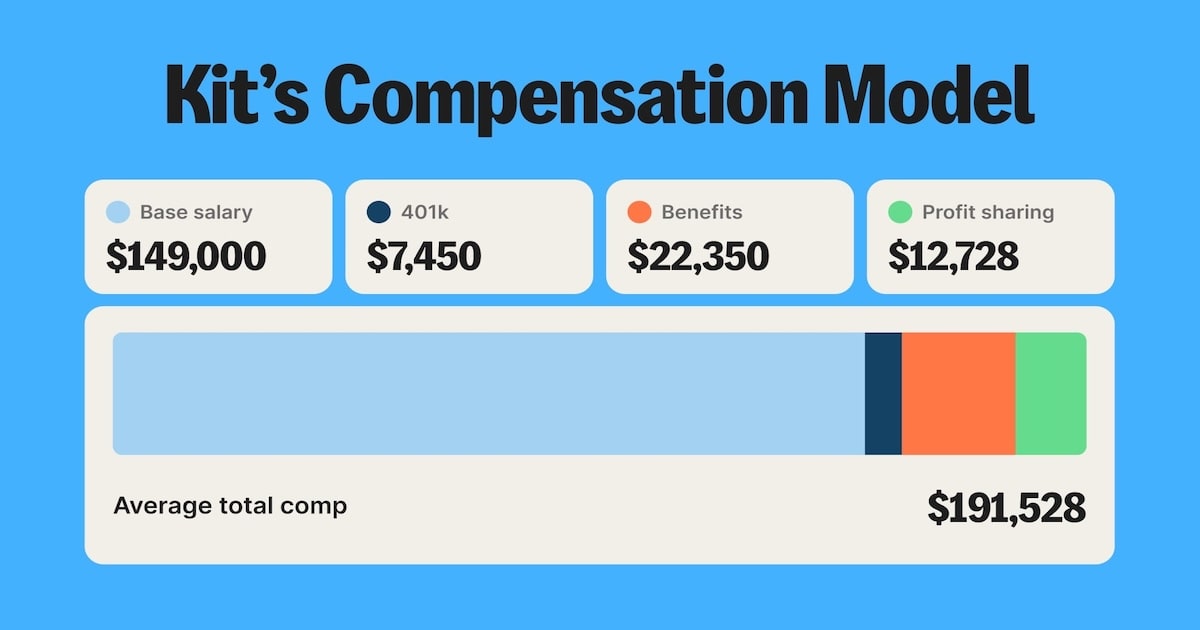
We closely track how total compensation has grown year over year. This graph shows how average compensation has grown over a 9-year period, broken down by base salary, profit sharing, benefits, and 401k match.
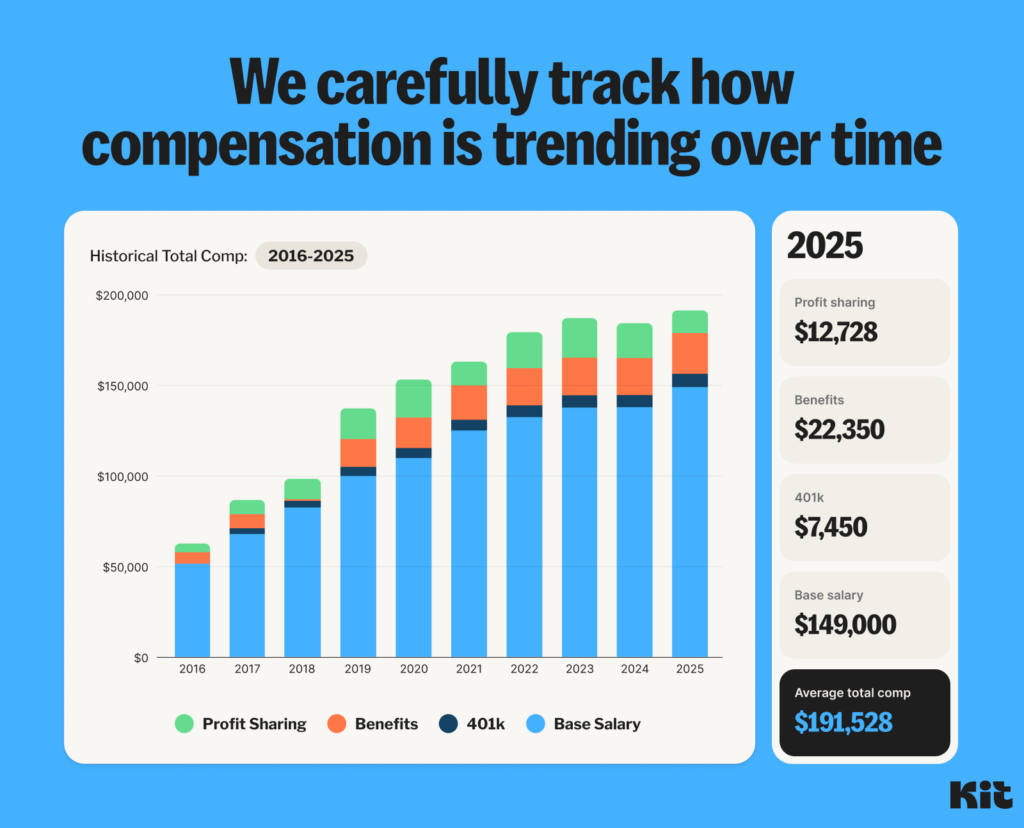
Equity isn’t included in this graph since it’s harder to calculate current value across the team, but it’s part of the full picture.
Why this model works
Kit’s Compensation Model is built around balance. If Kit fails, everyone is paid fairly along the way. If we have modest success, team members build wealth. If we hit our moonshot goals, everyone wins in a huge way—and we still control our destiny.
We also run fully open books internally. Every team member can see where money is being spent and calculate their own profit sharing. Transparency makes all of this work.
If you’re building a bootstrapped company and thinking through compensation, I hope some part of this is useful. The model didn’t come together overnight, but a decade in, it’s the approach I’d recommend to any founder who wants their team to think like owners—without betting everything on an exit.


Leave a Reply